I've killed lavender more times than I care to admit. Clay soil, overwatering, a “sunny” balcony that got four hours. This lavender care guide is the fix list I wish someone handed me years ago.
What's in here (jump around)
What Does Lavender Actually Need?
Lavender isn't fussy. It just has very strong opinions about three things: drainage, sun, and airflow. Get those right and you can mostly ignore it. Get them wrong and no amount of fertilizer will save you.
I learned this the expensive way—six English lavender plants in a raised bed that looked perfect. The soil held water like a sponge. By August, every root ball was brown mush. The plants above ground still looked fine for weeks. That's the trap.
According to the Royal Horticultural Society, lavender thrives in poor to moderately fertile, well-drained soil in full sun. “Full sun” means six hours minimum. Not a bright window. Not dappled shade under a tree that gets sun in the morning.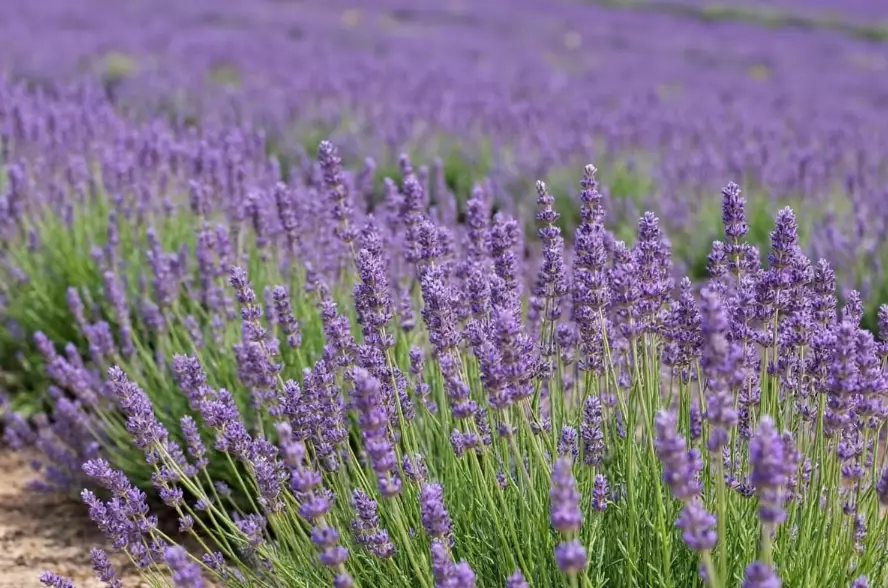
7 Lavender Care Mistakes I See Every Season
1. Planting in soil that holds water
This is the number-one killer. Lavender roots need air. Heavy clay or compost-rich potting soil suffocates them. Mix in grit or horticultural sand at a 1:1 ratio if your soil drains slowly. In pots, use a cactus mix, not general-purpose compost.
2. Watering on a schedule
Lavender is drought-tolerant once established. New plants need water until roots take hold—usually three to four weeks. After that, water when the top inch of soil is dry. Not every Tuesday.
3. Skipping the prune because the plant looks healthy
An unpruned lavender gets woody in the center and floppy at the edges. By year three it's a hollow shell. Prune every year after flowering. More on the exact cut below.
4. Fertilizing like it's a tomato
Rich soil makes lavender grow soft and leggy. It flops over and invites fungal problems. A light sprinkle of compost in spring is plenty. Skip the high-nitrogen feed entirely.
5. Crowding plants for instant fullness
I get it—a sparse bed looks sad. But lavender needs air moving through it. Space plants 12 to 18 inches apart for smaller varieties, up to 24 inches for big ones like 'Grosso'. Crowding is how you get powdery mildew in humid summers.
6. Mulching with the wrong material
Wood chips piled against the stem hold moisture right where rot starts. Use gravel or coarse sand if you mulch at all. Keep it a couple inches back from the crown.
7. Buying a plant that won't survive your winter
English lavender (Lavandula angustifolia) handles cold better than French (L. stoechas). If you garden in a cold zone and buy French lavender because it was pretty at the nursery, you're planting an annual. Check the tag.
How to Water Lavender Without Killing It
Here's the test I use: stick a finger two inches into the soil. Dry? Water deeply until it runs out the bottom (for pots) or soaks the root zone (for beds). Damp? Wait.
In my climate—hot, dry summers, mild wet winters—I water established lavender maybe every two weeks in July. New plants get a deep soak every three or four days for the first month. Pots dry faster. Terracotta dries fastest. A glazed pot in full sun can cook roots, so mulch the surface with gravel.
| Season | Container lavender | In-ground lavender |
|---|---|---|
| Spring (new plant) | Water when top inch is dry, usually 2–3 times per week | Deep soak once a week |
| Summer (established) | Every 5–7 days | Every 10–14 days |
| Fall | Every 10–14 days | Rain is usually enough |
| Winter | Rarely—check monthly | Do not water; protect from wet |
Pruning Lavender: The Timing Nobody Gets Right
Two prunes per year. That's it. First, right after flowering—cut back the flower stalks and about an inch of leafy growth. Don't cut into the woody part; it rarely regrows.
Second, in early spring when you see new green shoots at the base. Shape the plant into a dome, removing dead stems and a little of last year's growth. Leave at least two sets of leaves on each branch.
Here's the non-consensus bit: people say “prune in spring” or “prune in fall.” In my experience, fall pruning in cold zones is a mistake. Fresh cuts invite winter dieback. Better to wait until spring.
Winter Care for Lavender (Zone by Zone)
Cold isn't usually the problem. Wet cold is. In zones 5–7, the biggest risk is soil that stays soggy and freezes around the roots. Plant on a slope or mound if you can. A layer of gravel around the crown helps. In zones 8–9, winter is mild but rain can be relentless—make sure pots drain freely and aren't sitting in saucers.
English lavender varieties like 'Hidcote' and 'Munstead' are the safest bet for cold. French and Spanish lavenders want zone 8 or warmer.
Which Lavender Variety Should You Pick?
| Variety | Hardiness | Best for | Flower color |
|---|---|---|---|
| 'Hidcote' | Zones 5–8 | Borders, hedges, cold climates | Deep purple |
| 'Munstead' | Zones 5–8 | Compact gardens, pots | Purple-blue |
| 'Grosso' | Zones 6–9 | Dried bundles, big impact | Violet |
| 'Provence' | Zones 7–9 | Culinary use, fragrance | Pale purple |
| French lavender (L. stoechas) | Zones 8–9 | Warm gardens, early blooms | Dark purple with bracts |
For most gardeners in temperate climates, 'Hidcote' or 'Munstead' will save you a lot of heartache. They're forgiving and compact.
Real Questions From a Grower
My lavender looks dead after winter. Is it?
Scratch a stem near the base. If there's green underneath, it's alive but slow. If it snaps dry and brown, that branch is dead. Wait until early summer before yanking the plant—lavender can be shockingly late to wake up. I've had 'Munstead' look like twigs in April and push new shoots in June.
Why is my lavender turning grey and fuzzy?
That's likely powdery mildew, common in humid summers with poor airflow. It's not just about moisture—it's about still air. Thin out crowded stems and water at the base, not overhead. If it's severe, cut the plant back hard and hope for a dry spell.
Can I grow lavender in a pot indoors?
You can, but it's a losing battle long-term. Even a sunny south window doesn't give the intensity of light lavender wants. If you try, use a gritty mix, a pot with lots of drainage holes, and water sparingly. A small variety like 'Munstead' has the best odds. Move it outside in summer.
How do I stop lavender from getting woody?
Annual pruning is the only real prevention. Once the plant is woody in the center, you can't reverse it—you can only work around it. If the plant is already hollow, replace it. Take cuttings from the healthy outer stems before you pull it up.
Does lavender need full sun all day?
Six hours of direct sun is the minimum. Eight is better. Afternoon shade is more tolerable than morning shade because it dries dew faster. A spot that gets morning sun and afternoon shade often leads to weak growth and fewer flowers.
This lavender care guide is based on my own growing notes from a decade of trial and error, plus references to the Royal Horticultural Society's lavender growing guidance. Facts checked against standard horticultural sources.


Comments
Share your experience