If you're searching for "What is Apple's AI strategy?", you've probably noticed something odd. While Google and Microsoft shout about their latest AI models from the rooftops, Apple is quieter. They don't have a chatbot named after a Shakespeare character or a search engine that writes essays for you. For years, this led people—myself included, back when I was just following the headlines—to assume Apple was behind. That's a fundamental misunderstanding. After digging through developer documentation, analyzing countless keynote speeches, and actually using the ecosystem day in and day out, I've realized Apple's AI strategy is not about catching up. It's about playing a completely different game.
What You'll Find in This Guide
The Core Philosophy: AI You Don't Notice
Apple's approach is best summarized as ambient, integrated, and privacy-preserving. They're allergic to the term "AI" in marketing—they prefer "machine learning" or, more recently, "Apple Intelligence." This isn't semantics. It reflects a design goal: the intelligence should be a feature of a product, not the product itself. You don't "use Apple AI." You use a camera that takes stunning Night mode photos (powered by AI). You use a keyboard that predicts your next word with scary accuracy (powered by AI). You get a watch that warns you about a potential atrial fibrillation event (powered by AI).
Here's the non-consensus part most analysts miss: Apple's primary AI customer isn't the end-user in the abstract. It's the developer and the product manager inside Apple. Their strategy is to build incredibly efficient AI/ML tools (Core ML, Create ML) and silicon (the Neural Engine) that allow their own teams to bake intelligence into every app and service seamlessly. The user experience is the goal; AI is just the ingredient.
I remember the first time I used Live Text. I was looking at a photo of a recipe my friend sent me. Without thinking, I tapped on the text in the photo and copied it. It just worked. There was no "enable AI vision" button. That's the Apple playbook. Make it so intuitive and context-aware that it feels like a natural extension of the device, not a bolted-on "smart" feature. This philosophy creates a high bar. The AI has to work perfectly, silently, and privately, or it breaks the illusion of seamless magic.
The Three Technical Pillars of Apple Intelligence
To execute this philosophy, Apple's strategy rests on three interconnected pillars. Miss one, and the whole thing wobbles.
1. On-Device Processing: The Privacy Guarantee
This is Apple's hill to die on. Whenever possible, AI tasks run directly on your iPhone, iPad, or Mac. The Neural Engine, a dedicated processor core in Apple silicon, is built for this. Think face recognition in Photos, Siri voice recognition for basic commands, or keyboard predictions. The data never leaves your device. This addresses the single biggest user pain point in AI today: data privacy and security. You might trust Google with your search queries, but do you want your personal photos, messages, and health data sent to a server for analysis? Apple bets the answer is a resounding "no."
2. The Silicon Foundation: Hardware and Software Fusion
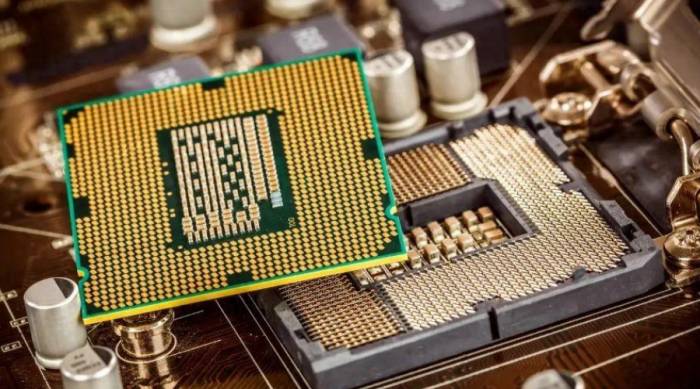
Apple is perhaps the only company that designs the operating system, the app frameworks, and the chips. This vertical integration is their superpower for AI. They can optimize Core ML to run flawlessly on the Neural Engine's specific architecture. When they announce a new feature like "Photonic Engine" for computational photography, it's a hand-in-glove collaboration between the camera sensor, the ISP (Image Signal Processor), the Neural Engine, and the software algorithms. A competitor using a generic Qualcomm or MediaTek chip can't achieve this level of efficiency. It's why an iPhone can apply staggering computational photography in real-time while some Android flagships still pause for a second.
3. Cloud-Based Augmentation (When Necessary)
Apple isn't dogmatic. They know some tasks—like searching the entire web with complex context or generating entirely new images—are too demanding for a phone. This is where "Private Cloud Compute" comes in. It's their compromise. For tasks that need server power, your data is encrypted, sent to Apple-owned servers running on Apple silicon, processed without being stored or accessible to Apple, and the result is sent back. They've published white papers on this architecture, inviting security researchers to poke holes. It's an attempt to have the power of cloud AI without the privacy trade-off. Is it perfect? It's a new model, and its real-world security will be under immense scrutiny.
How Apple's AI Differs From Google and Microsoft: A Side-by-Side Look
It's easier to understand Apple's strategy by seeing what it's not. Let's break it down.
| Dimension | Apple's Approach | Google / Microsoft Approach |
|---|---|---|
| Primary Interface | AI is embedded into existing apps and OS features (Photos, Keyboard, Siri). The interface is the app itself. | AI is often a standalone product or chat interface (Gemini, Copilot, ChatGPT). You go to a specific box to "use the AI." |
| Data & Privacy Model | On-device first. Data stays with you. Cloud processing is a privacy-preserving last resort. | Cloud-first. Data is sent to servers to leverage massive models and improve services. Privacy is managed through policies and controls. |
| Business Model Link | AI drives device sales and ecosystem lock-in. It makes the iPhone more valuable. | AI drives advertising revenue (Google) or software/service subscriptions (Microsoft 365 Copilot). |
| Developer Focus | Provides tools (Core ML) to let developers build AI into their apps, enriching the ecosystem. | Provides APIs to let developers connect to their massive cloud AI models, enriching Google/Microsoft's platform. |
| Strengths | Privacy, seamless integration, reliability for curated tasks, energy efficiency. | Raw power and scale, breadth of knowledge, creativity in open-ended tasks, faster iteration. |
| Weaknesses | Can seem less ambitious or "behind" in headline-grabbing AI feats. Limited by device hardware. | Privacy concerns, higher latency, can feel like a separate tool rather than an integrated part of the system. |
See the divergence? Google's AI wants to know everything to answer anything. Apple's AI wants to know everything about your personal context to help you with your specific tasks, but it insists on doing that learning in your pocket.
The Future Roadmap and Potential Pitfalls
So, where is this all heading? Apple's AI strategy is leading to a deeply personalized, context-aware operating system.
The next phase, which they've begun calling "Apple Intelligence," is about cross-app, proactive assistance. Imagine your device understanding that the "dinner at 7" mentioned in a text message from your partner should automatically create a calendar event, pull up the restaurant's menu in Maps, and suggest leaving at 6:15 based on current traffic—all without you setting up a complex IFTTT applet. The AI acts as a personal assistant that understands the connections between your messages, emails, calendar, location, and apps.
But there are real risks. The reliance on on-device processing creates a hardware dependency. Older iPhones won't get the full "Apple Intelligence" experience. This could fragment the user base and be perceived as planned obsolescence. Also, their cautious, privacy-centric approach means they move slower in the generative AI race. While OpenAI drops a new model every few months, Apple's integrated features take years to develop and bake into the OS. They risk their "magical" features looking mundane if competitors integrate similar cloud-powered features faster, even if they are less private.
My personal take? Apple is betting that in the long run, consumers will value trust and integration over raw, sometimes erratic, power. It's a bet on quality over speed, on the ecosystem over the standalone app. Whether that bet pays off depends on whether they can continue to make their AI feel so essential and seamless that you'd never consider switching platforms.
Your Burning Questions Answered
This analysis is based on direct observation of Apple's product launches, developer conference materials, and technical documentation. The comparisons and predictions reflect an industry perspective shaped by tracking the convergence of hardware, software, and AI.

Comments
Share your experience